(An article based on South African Photographer Nontsikelelo “Lolo” Veleko’s long-term personal documentary project Skin Deep)
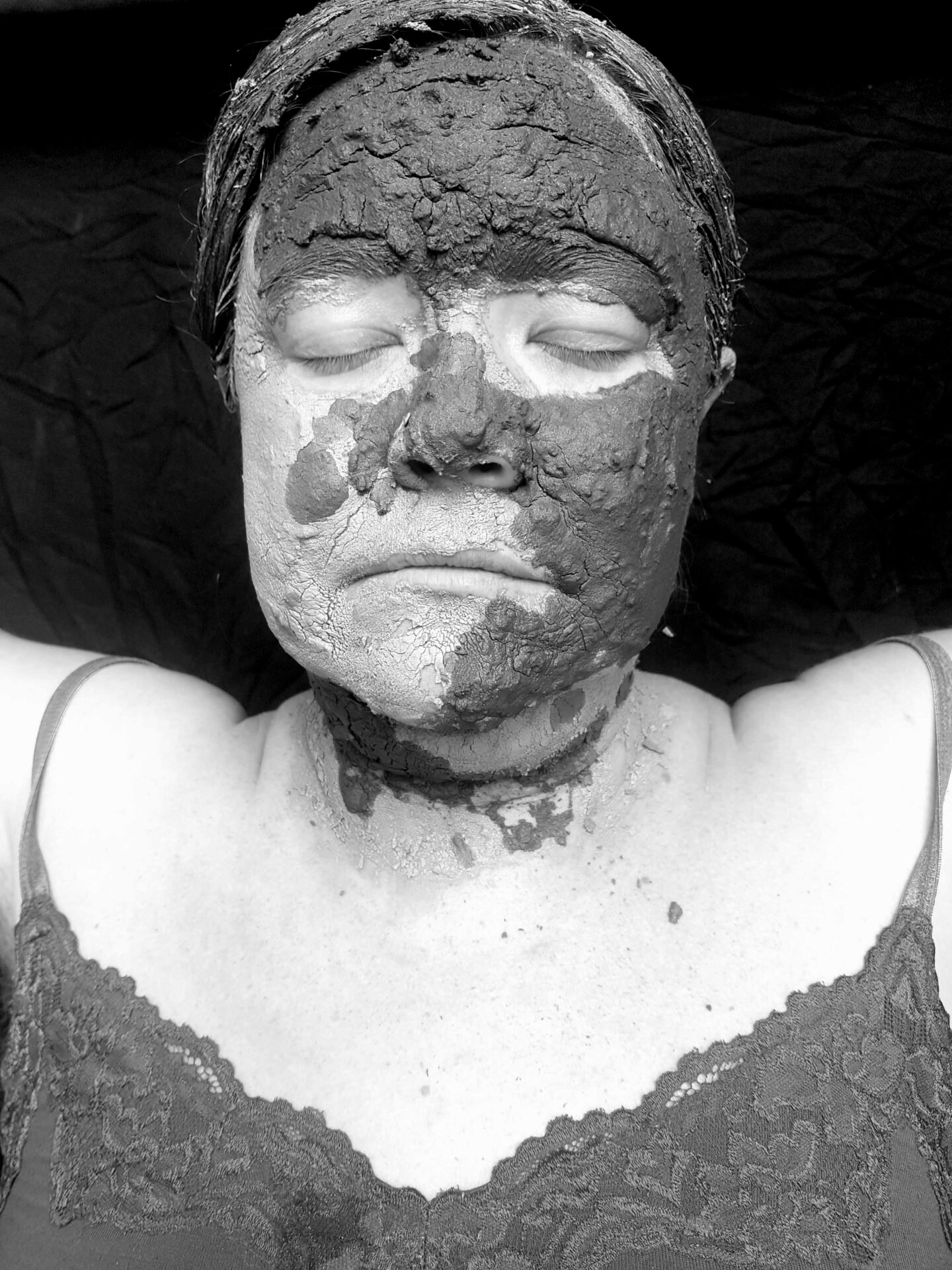
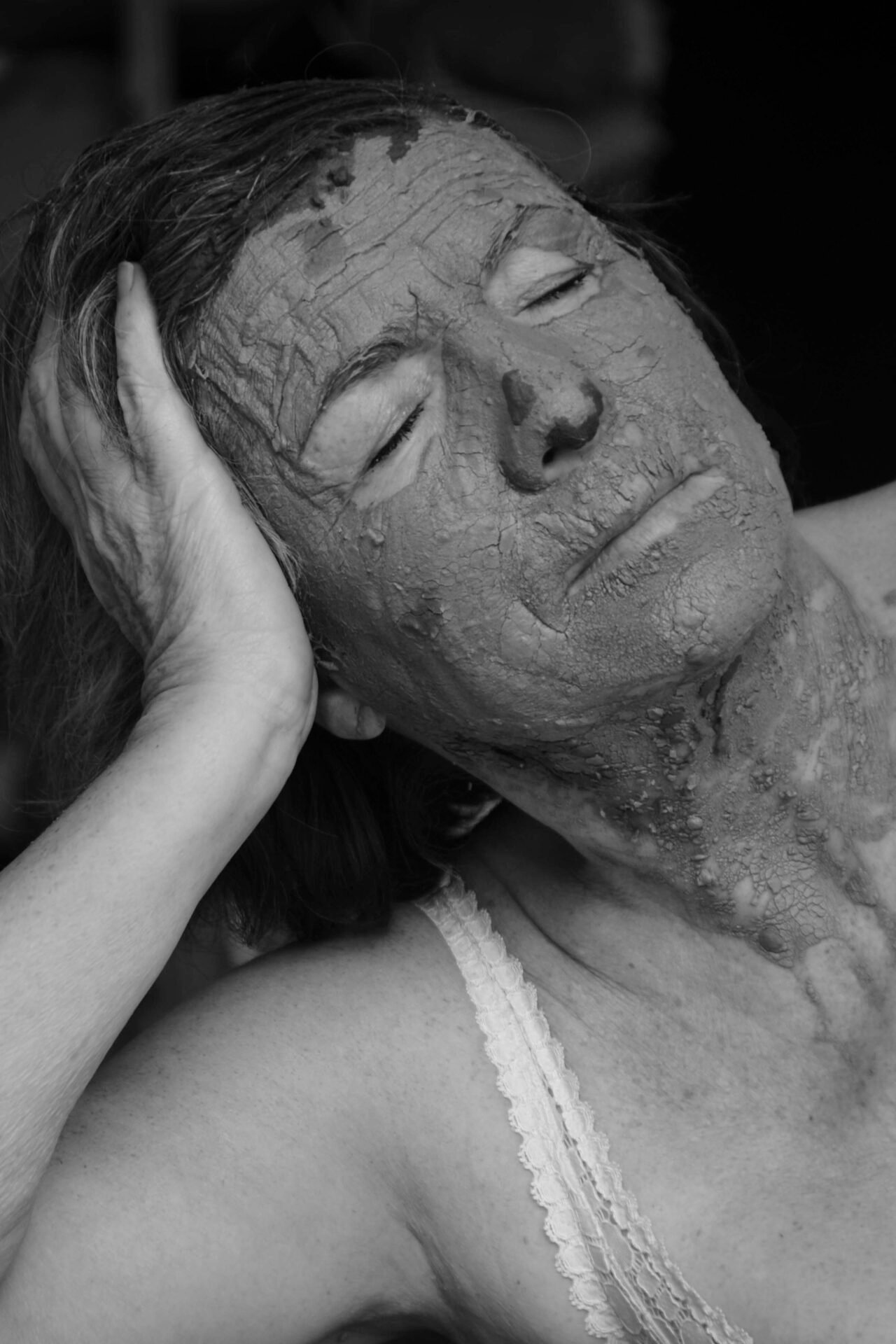
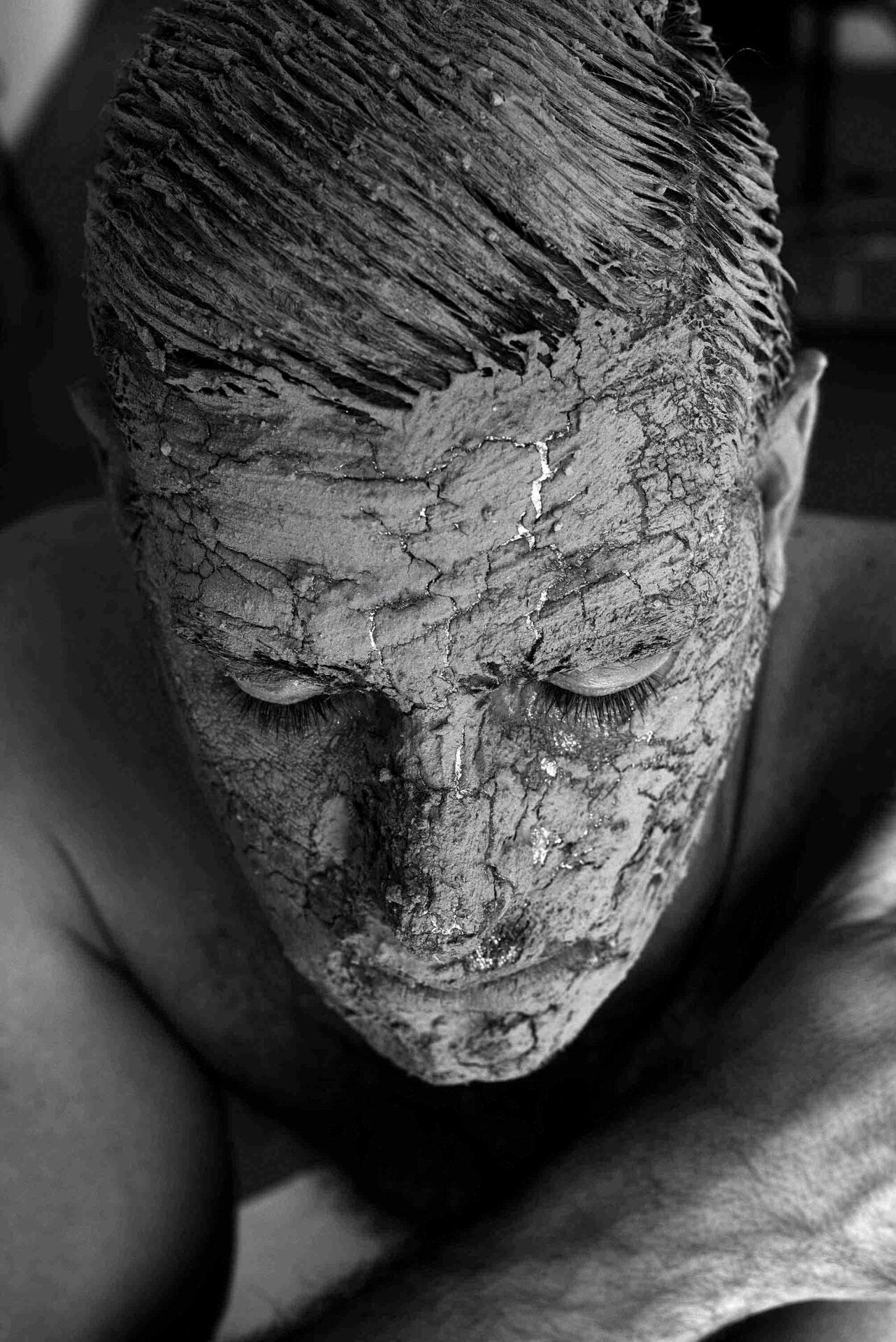
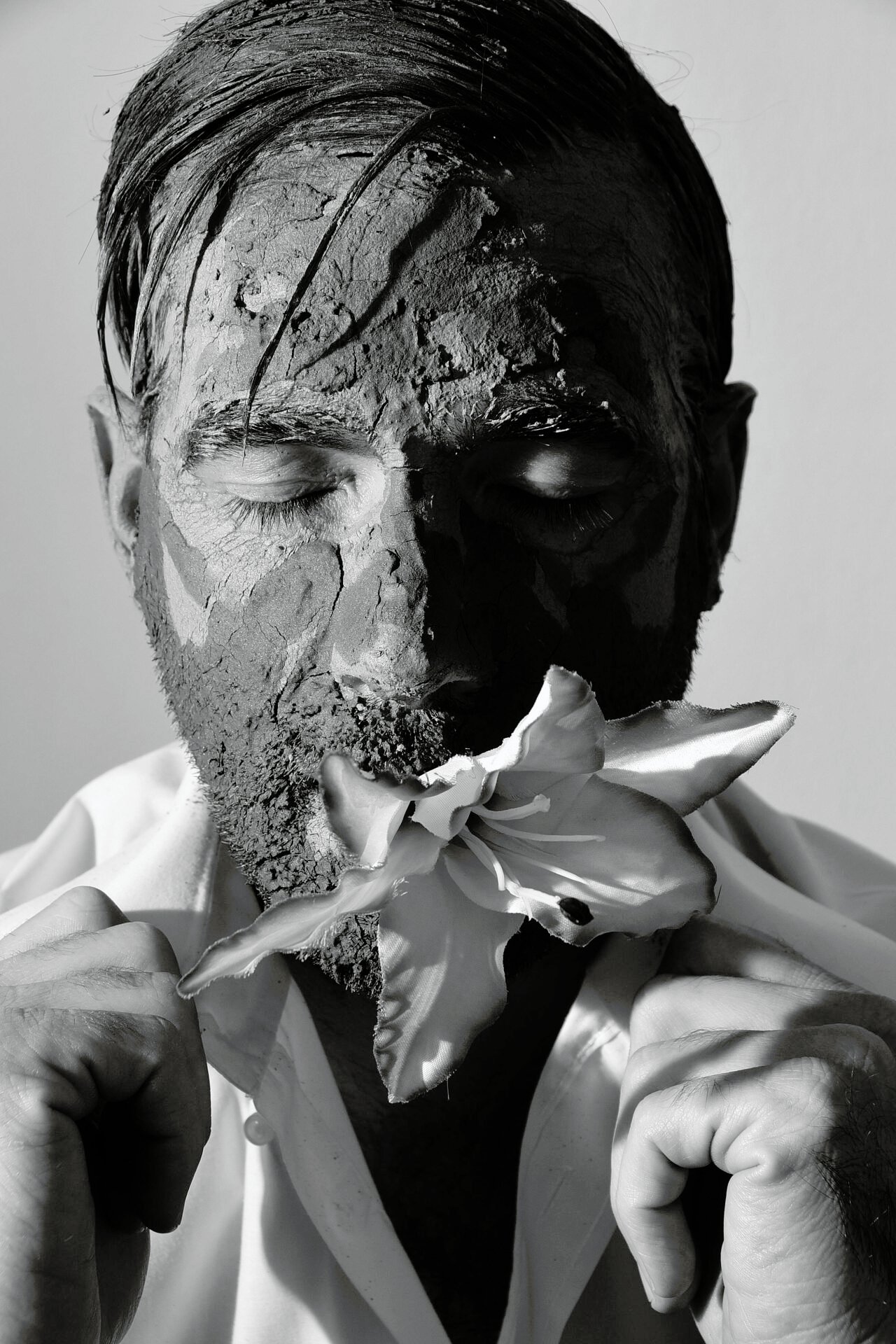
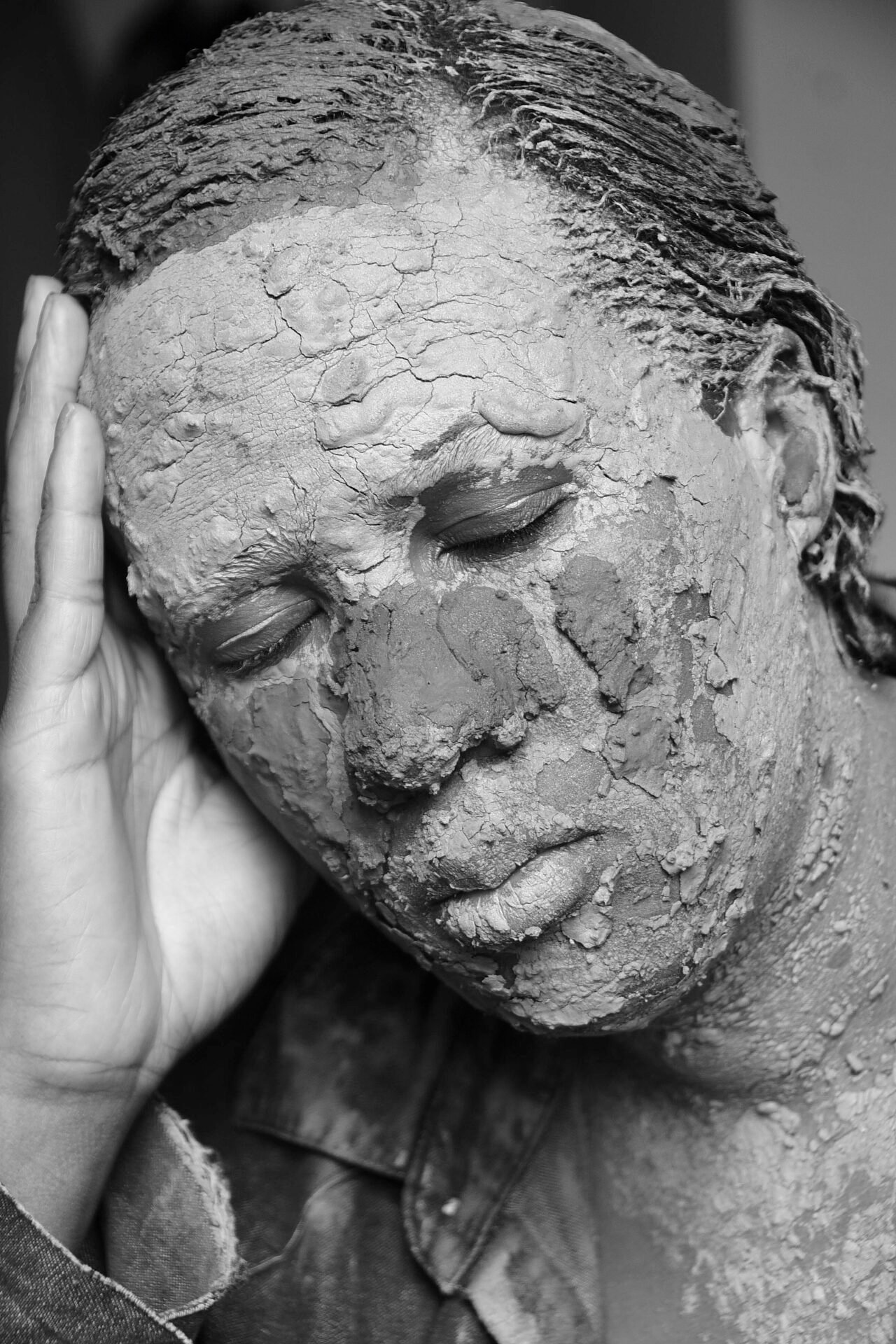
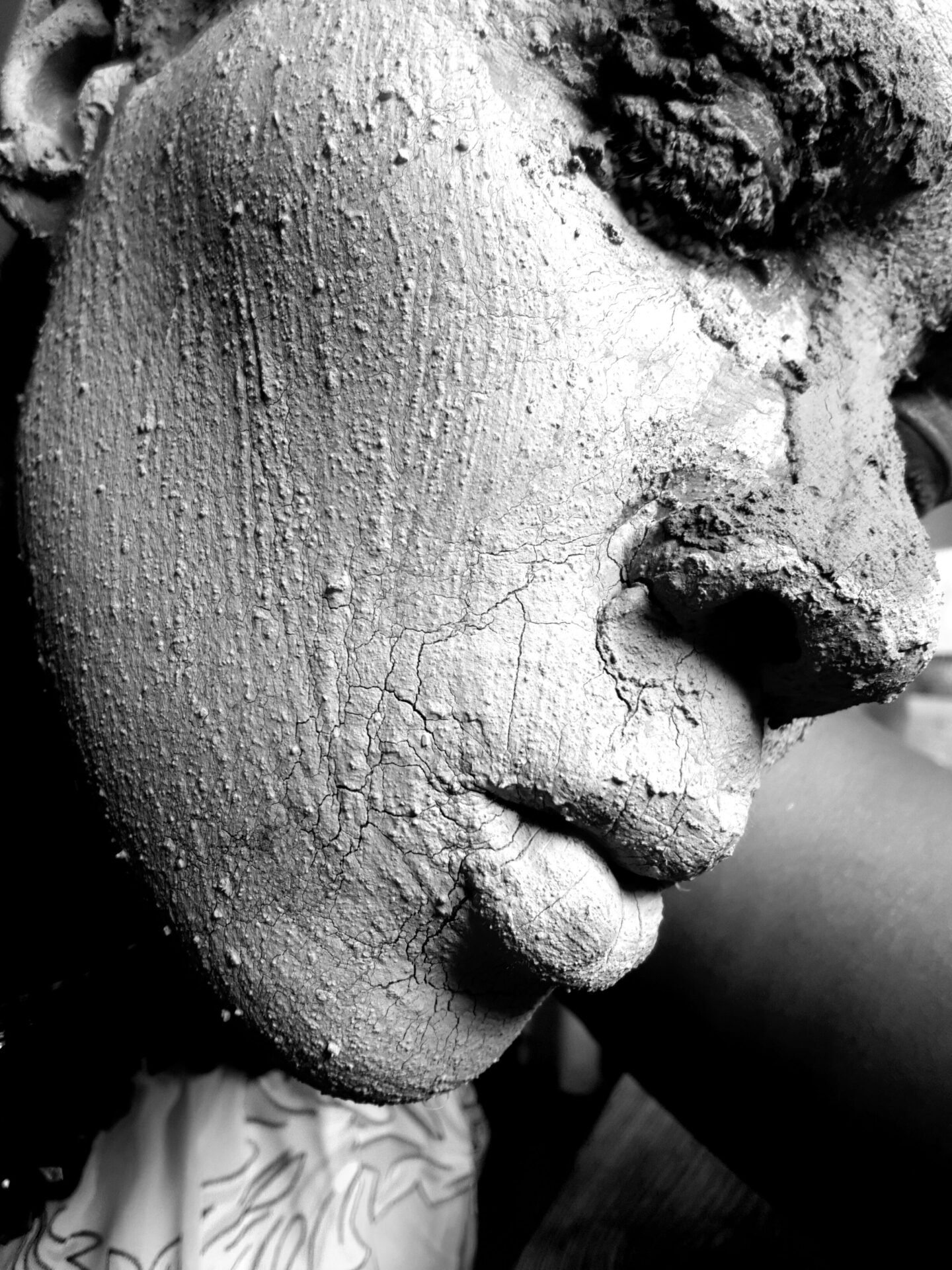
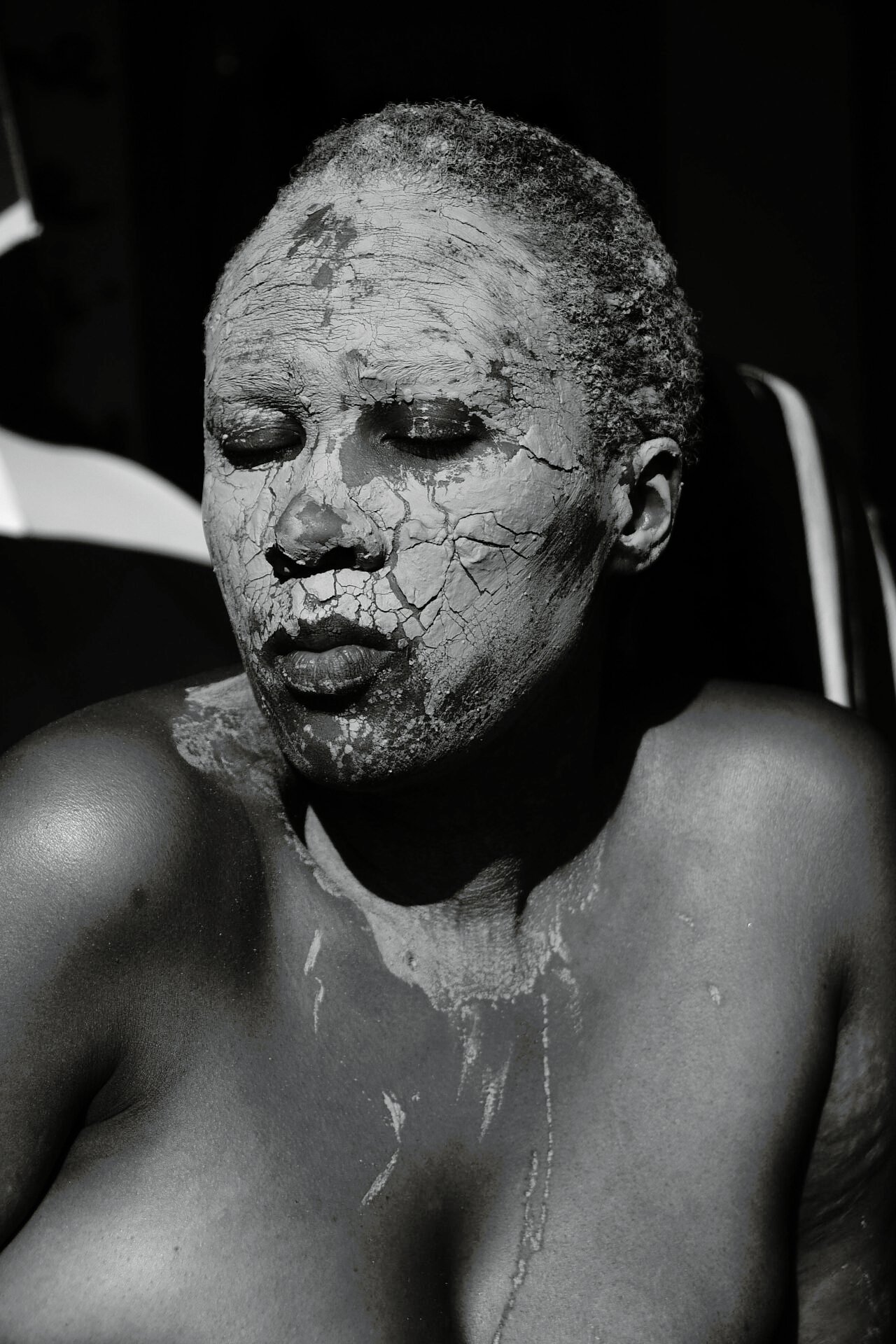
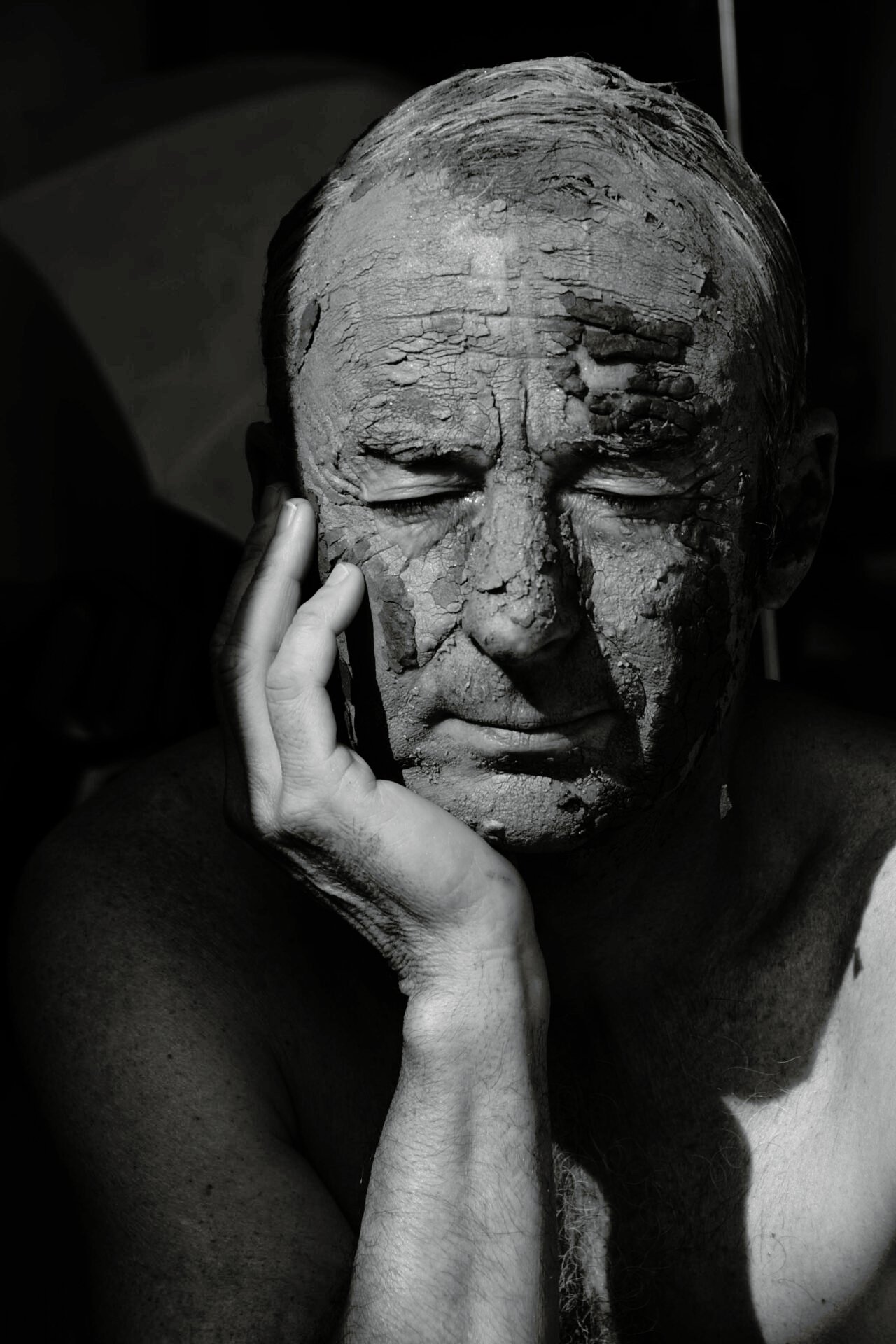
“Never have masks been so present in our lives as today”. SKIN DEEP aims to showcase that tension – a photographic project by Nontsikelelo “Lolo” Veleko. She is a South African photographer most notably recognized for her depiction of black identity in post-apartheid South Africa. A conversation with Lolo unfolds a candid portrait of an artist tracing a two-decade long journey. Her first exhibition in 2003 showcased her work on graffiti across Johannesburg and Cape Town, South Africa, and in the political statements “written on the walls.” Portraying urban culture as a living archive, her later works expanded into portrait, street, and fashion together. In SKIN DEEP, she tightens the frame, returning to the face and the skin as a site of story. “I think I was homesick… and I think when you are homesick, you get inspired by home.” This project – photographed between 2019 and 2023 – uses a regional practice in Africa as a reference to ask what masks protect and what they reveal about beauty, spirituality, and the private negotiations of identity. She was based out of France while working on this project. “I wanted to express that with the people I was with” and hence we see French artists becoming the face of this project. The photographs in this documentary are shown covered with riverbank mud – an element that, in many places across Africa and beyond, has long been used to draw out impurities and leave skin “soft and beautiful.” Beauty drawn from mud; mud as protection; a mask that insists we look past the surface. When asked—“what is Skin Deep?”—she answers by locating the work in South African and broader African spirituality, and in how that spirituality is expressed through the body. In some traditions, she says, those training to become traditional healers “put on a mask to showcase that you are different from everybody else”. She points to other rites of passage, too, including boys trained in the mountains to become men, who also wear the mud-mask to mark transition. And the practice travels: she mentions similar uses in Ethiopia and across other tribes, where mud can be used for beauty as much as for spiritual purpose. In her work, the mask also becomes a metaphor: protection not only from “death,” but from the gaze that “stops at the face or skin and cannot see into the depths of our beings.” Lolo points out that under these masks, we are all same—“sons and daughters of the soil,” with “the same composition of skin and blood.” During “the photography and development process,” she concentrates on focus until “the portrait emerges like a sculpture.” The drying mud cracks—an aesthetic feature rather than a flaw—opening “unexpected pathways.” Sometimes there is an underlayer of gold, so the fissures appear inlaid, recalling broken Japanese pottery where repair becomes a record of time and story, and texture is valued rather than erased.
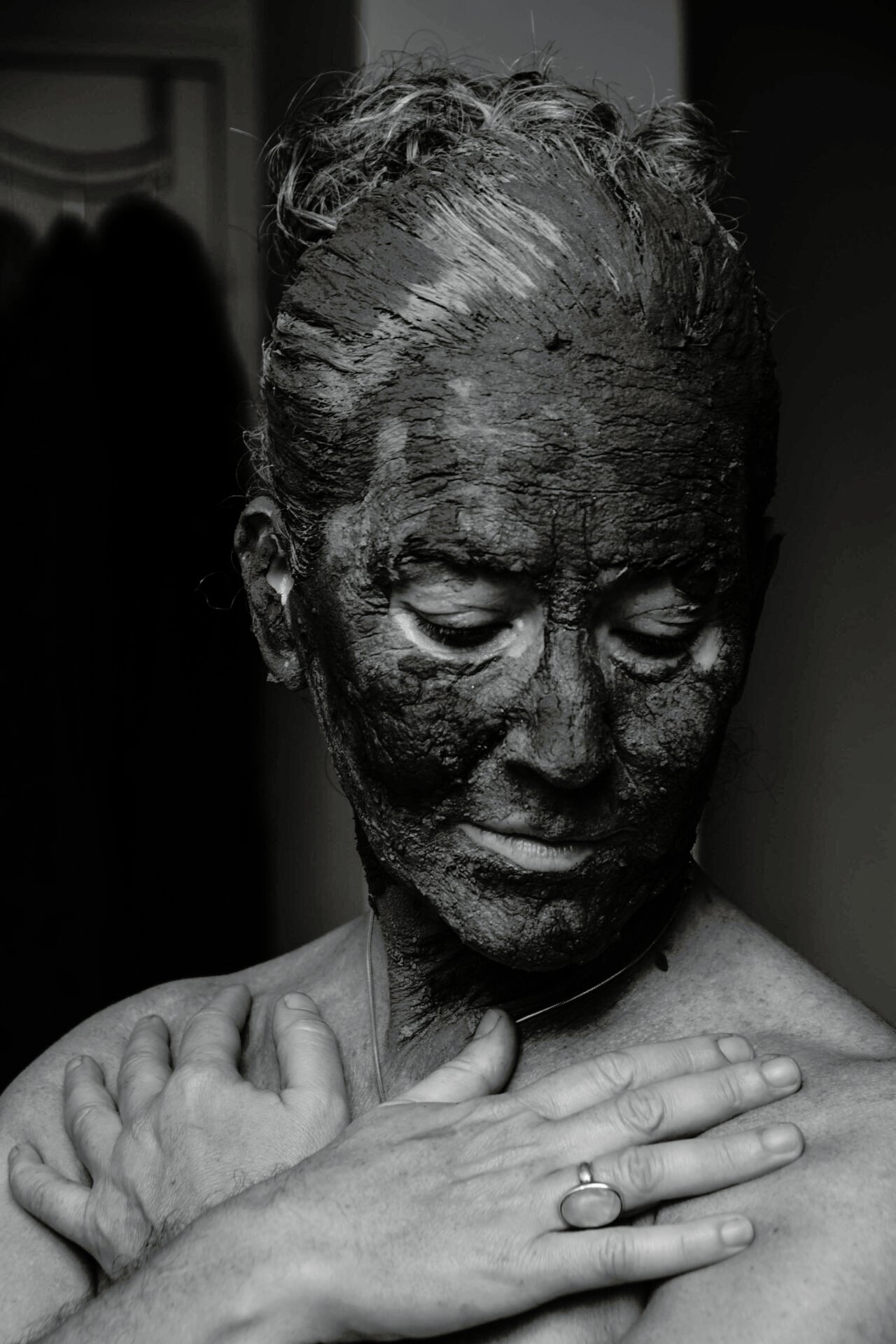
After moving to France, she describes language was an obstacle to her documentary method. So she took French lessons and leaned on friends for help—enough, she says, to explain the work “properly,” to her subjects. She explains a recurring strategy: “whenever I was not photographing other people, I would turn the camera to myself”. The reason is to feel “the uncomfortability of being in front of the camera,” and to test whether she can “communicate with the camera” in the way she asks of her subjects. The split in SKIN DEEP—portraits of others alongside self-portraits—becomes a record of that ongoing exchange. The choice of French sitters is a deliberate one. The subjects are asked to “project some other identity,” taking on a cultural mask they may not fully understand. “I am imposing my culture onto them.” This project is a continuing one as Lolo plans to go to South Africa to “do much more research than what I already have.” This intention suggests a shift from staging cultural memory in diaspora to testing it on home ground, where the mud-mask is not metaphor alone but lived practice.
Seeing past the surface
At its core, SKIN DEEP turns the most ordinary surface—the face—into a threshold. Mud protects, mud beautifies, mud cracks; focus sharpens and a portrait “emerges like a sculpture.” The project asks viewers to sit with the paradox of the mask: that what covers can also reveal, that what looks like concealment can be a route to privacy, and that the skin—however decorated, defended, or judged—may be the least important thing about what is underneath.