A submission to the InDPC Documentary Award 2026 explores the history of a lived landscape mired in uncertainty.
For almost all his life, Ayodhya Hills in West Bengal’s Purulia existed in photographer Ayan Das’s imagination as a tourist spot with quiet beauty. He had twice visited it as a schoolboy, but when he returned as a photographer working on a magazine assignment in 2022, the majestic hills revealed a deeply unsettling story.
Far from the serene escape of his boyhood memory, the land was now a teeming site for an ongoing struggle over its future. Indigenous Santali residents were up in arms against the proposed Turga Pumped Storage Project (TPSP), which would submerge about 292 hectares of land, including pastures and farms. Since 2022, Das has returned several times to the hallowed land, recording its past and present, to gradually build a body of work that asks: What does it mean to continue living in a place when its future is being planned elsewhere? Over four years, Das chronicled the impending loss of community and home in his work ‘On This Land There Are Reasons to Live’.
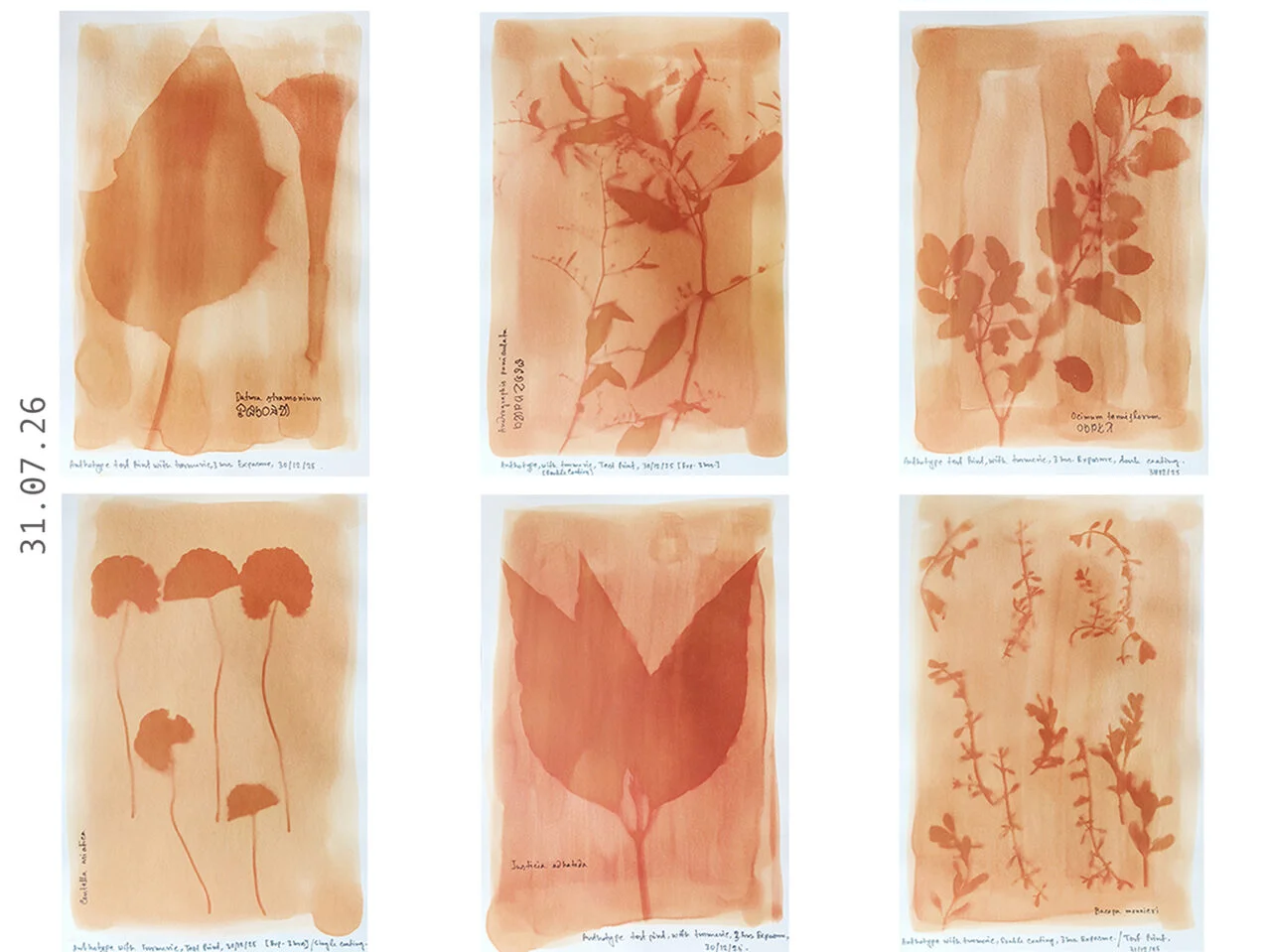
“I also grew up in a village. Land can hold more than property or scenery…[there are elements like] childhood, labour, rituals, fear, ancestors and belonging attached to a place. My work asks: when land is imagined as future infrastructure, what counts as evidence that life already exists there? Whose memory remains visible and who is allowed to keep the record?” Das muses. The photographs use a varied mix of storytelling media to convey ‘seasonal time’: landscapes, portraits, oral testimony, stills of villagers and animals, double exposures, camera-trap footage, family photographs, and anthotype prints. This last medium is particularly significant and poignant. “They are made from plant-based pigments, in fact, from the medicinal plant pigments [sourced] from the landscape. The anthotype prints fade over time – I used this fragility of the medium deliberately to show that engineering projects are a permanent certainty of a land’s future. But the medium admits uncertainty, and this contrast shows that the land’s future is not settled, and neither is the record of it,” he explains.
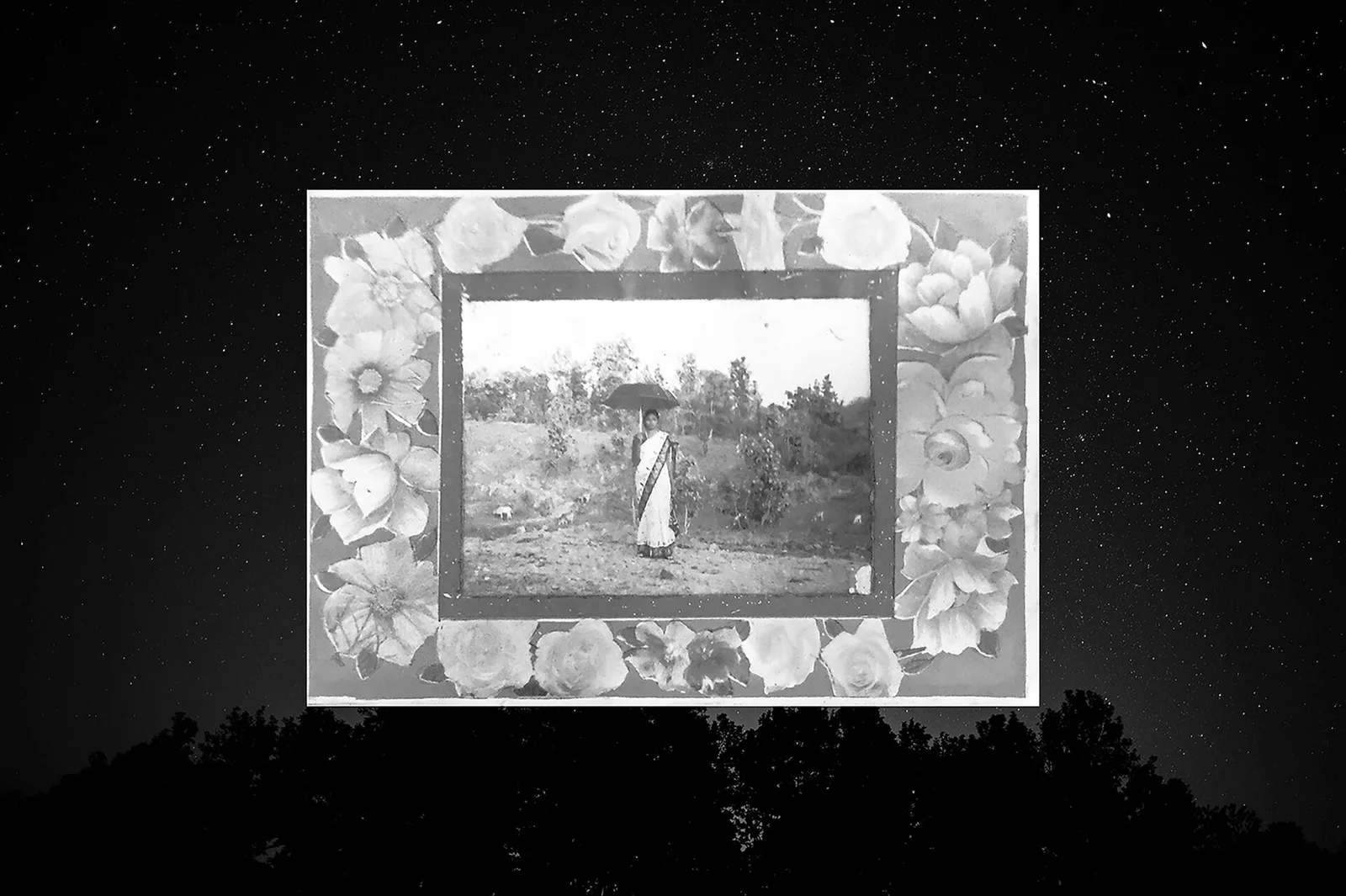
Das tells the land’s story through ancestral remembrances drawn from Santali oral epic ‘Jamsim Binti’, tales of deities like Marang Buru and Thakur Jiu, the community’s creation story, its forest animals and medicinal plants. “I would stay there for long periods of time, researching Santali mythology and conversing with village elders. Over time, Ayodhya Hills became a place of relationship, memory, work, belief and ongoing resistance. [My work] and each form I use in it carries a different kind of evidence. These processes do not turn the community into a symbol of disappearance; they hold uncertainty, renewal, and the persistence of memory when official histories reduce a living space to a map, a project, or a future site of submergence,” he says.
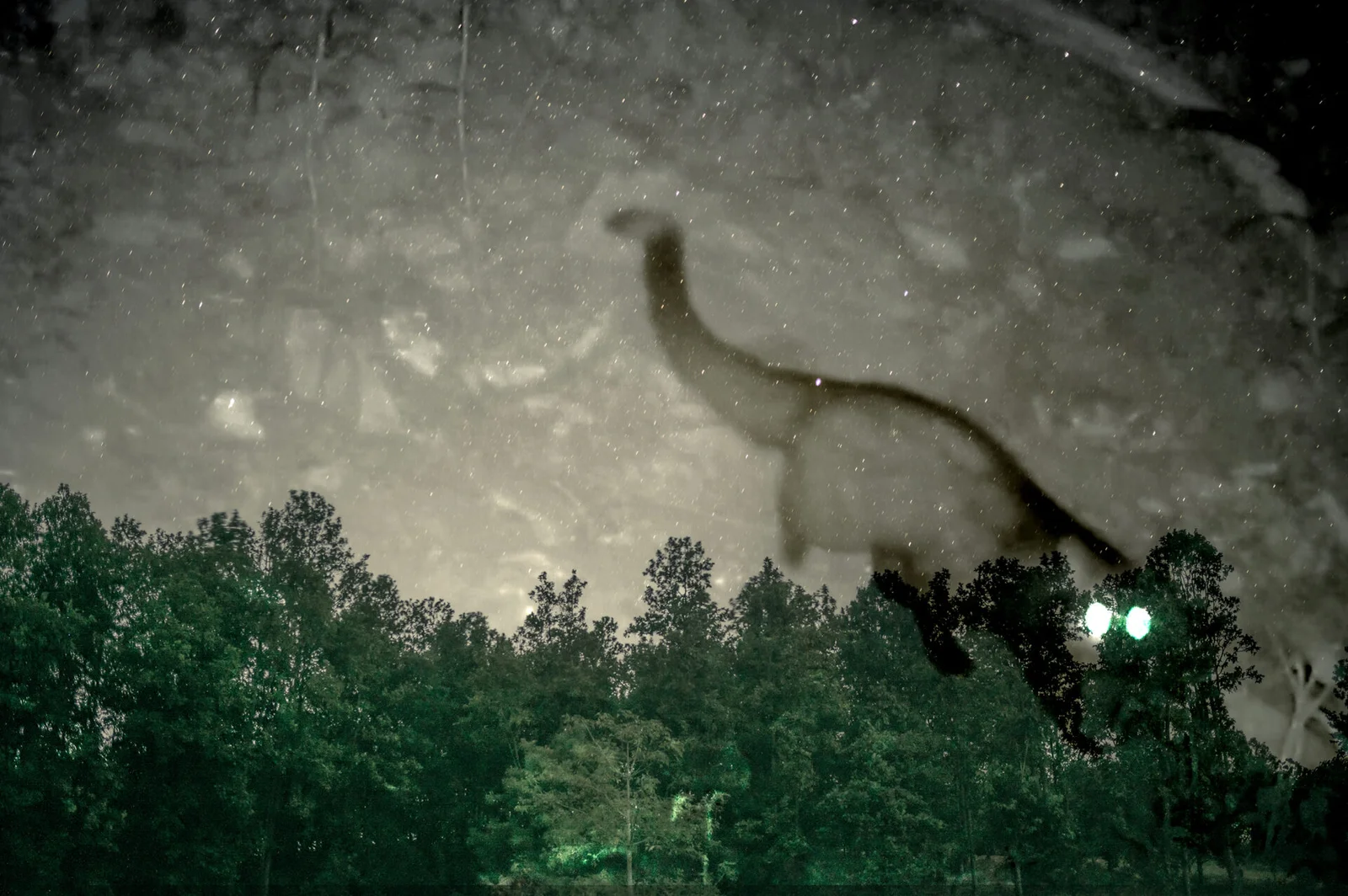
His double-exposure images combine screenshots from camera-trap footage with his own still photographs of the landscape. Animals appear as presences moving through the same forested terrain that people inhabit, remember and contest. “By bringing these image sources together, I hold visible and less-visible worlds in one frame: the landscape seen during the day, and animal life revealed through the camera’s nocturnal, unattended gaze,” Das says.
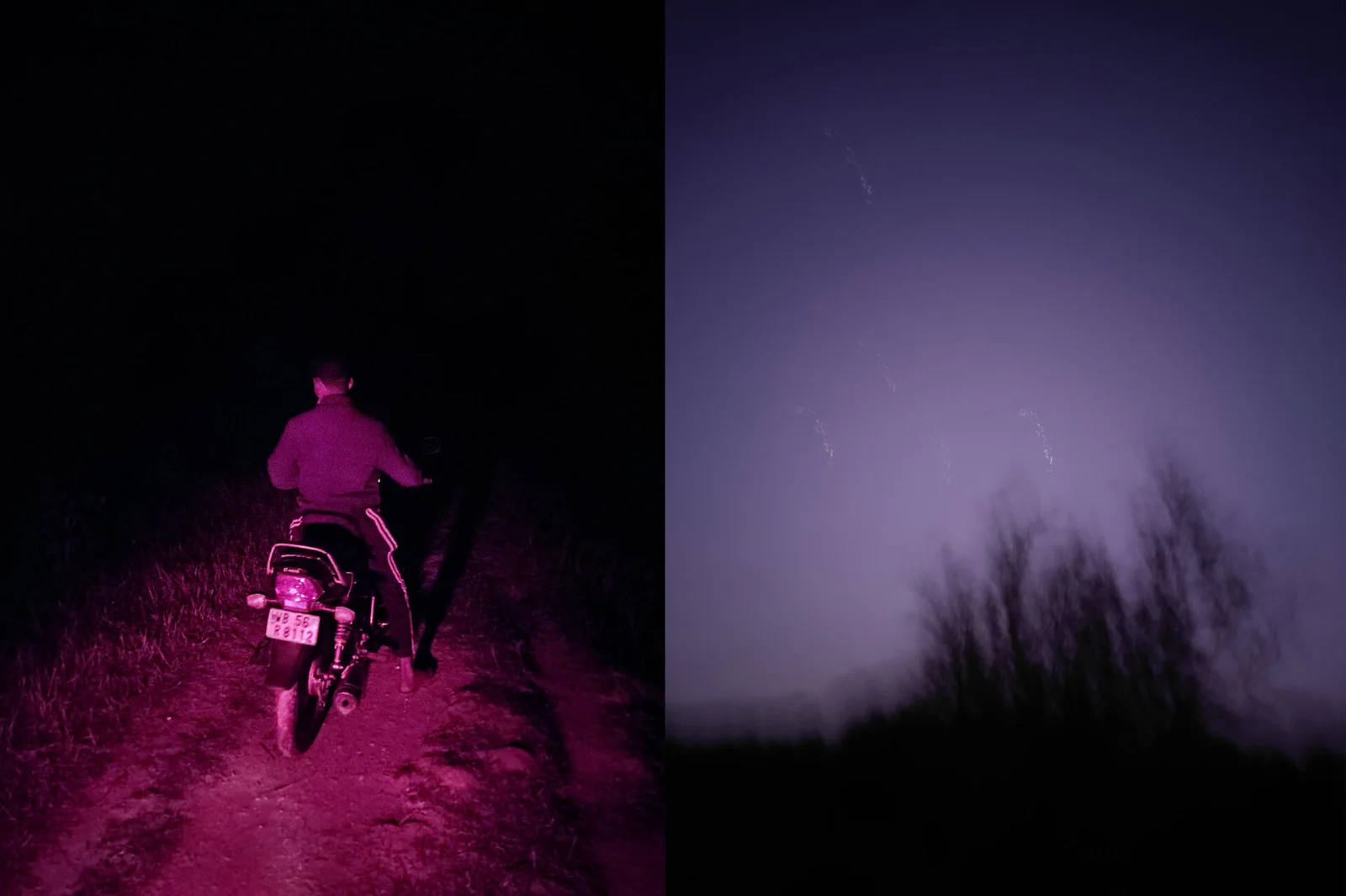
He is unequivocal about the ‘ethics of looking’, and that he is still an outsider with a camera despite spending four years in the area. “A portrait alone can be dismissed as just an image. But when I place it alongside oral testimony, family photographs and even camera footage of the forest that the villagers depend on, together they build evidence that is harder to erase,” Das says. “The elders’ stories carry the deepest layer of how the land is understood as ancestry and belief. But I was conscious of not presenting the elders’ grief as a community belonging to the past. So I also photographed present-day life, from its farming to its village fairs and cockfights, to show that this is not memory that is lost, but memory that is being lived and passed on.”
Das’ work is a powerful chronicle of a region that insists on living and thriving in a way that official records do not recognise. “Official records tend to erase the very relationships my work tries to show. My photographs do not replace or overwrite those records, but exist as an alternative archive,” he signs off.