Outside his apartment in Gurgaon, Vaibhav Sharma stands facing a wall beside a narrow metal grille. There is room around him. But his gaze finds an obstruction. For documentary practitioner Utkarsh Singh, this portrait of a man who returned from Canada captures a troubling possibility: coming home does not necessarily mean being free to move.
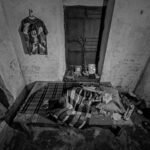
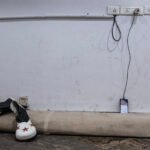
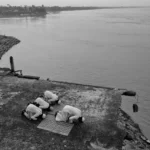
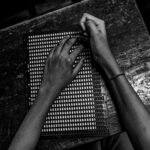
Sharma appears “unable to move where he desires,” Singh explains during his visual seminar. The tension runs through as we lose sight of the line across the sky, his photographic project submitted for the InDPC Documentary Award 2026. Through portraits, domestic objects and constructed images, he considers what people bring back to India, and what continues to hold them between places.
The lives behind the return
Singh began with people within his family and friendship circles who had lived abroad before returning to Indian cities. His subjects were spread across Delhi, Gurgaon, Ahmedabad, Mumbai, Pune, Bengaluru, Lucknow and Goa. “Most of them migrated multiple times,” he notes. Their journeys are difficult to reduce to a straightforward departure and homecoming.
Their experiences encompassed the United States, Canada, Australia, the UK and destinations across Europe and Asia. In discussing these movements, Singh identifies education, career opportunities, freedom of expression, infrastructure and family obligations among the considerations shaping people’s decisions.
The project also grew from his own experience of estrangement and the discomfort of returning. That personal starting point gives his inquiry an emotional stake. Home can be familiar without being uncomplicated; a return can resolve the question of where to live while leaving the question of belonging open.
Sharma’s portrait holds some of that complexity in a small detail. Singh points out the kalava on his wrist and a tattoo of Mother Mary on his hand. Both belong to the same person. The photograph allows these affiliations to coexist without requiring him to explain himself.
What objects carry
Singh’s account of migration extends into the things people keep. Jewellery, coins, souvenirs and preserved food become ways of approaching histories that might otherwise seem remote from an Indian living room.
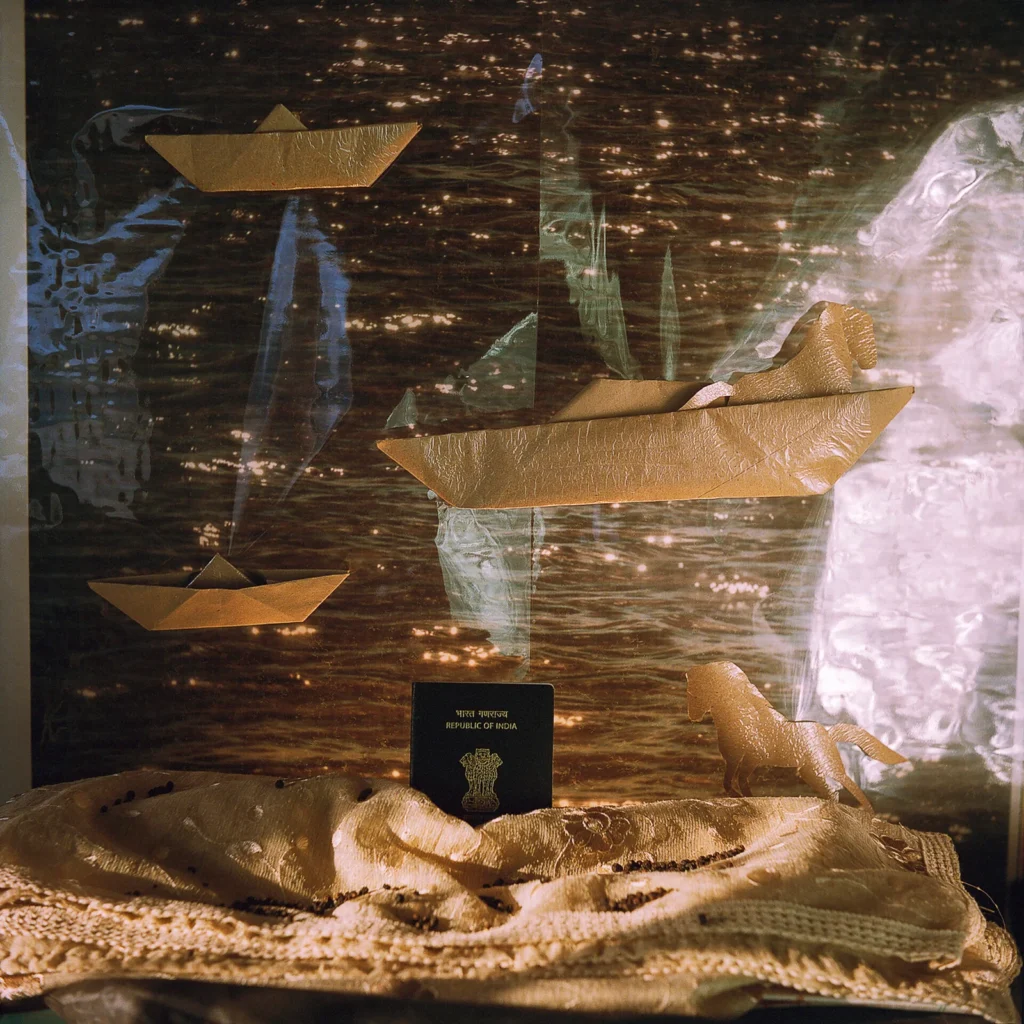
“I was quite fascinated by that idea of trades that was going around,” he says, describing his interest in historical routes of exchange. The movement of tea, and the different names associated with its journeys over land and sea, offers him one way into that history. Elsewhere, paper boats and a passport bring maritime travel into contact with the paperwork of contemporary movement.
These constructed photographs ask the viewer to spend time with overlapping associations. Singh draws on a cowboy artefact from a home in Pune, a coin collection in Bengaluru and landscape images from another participant. He connects the cowboy figure to settlement and the appropriation of land, questioning the glamour Hollywood has attached to it.
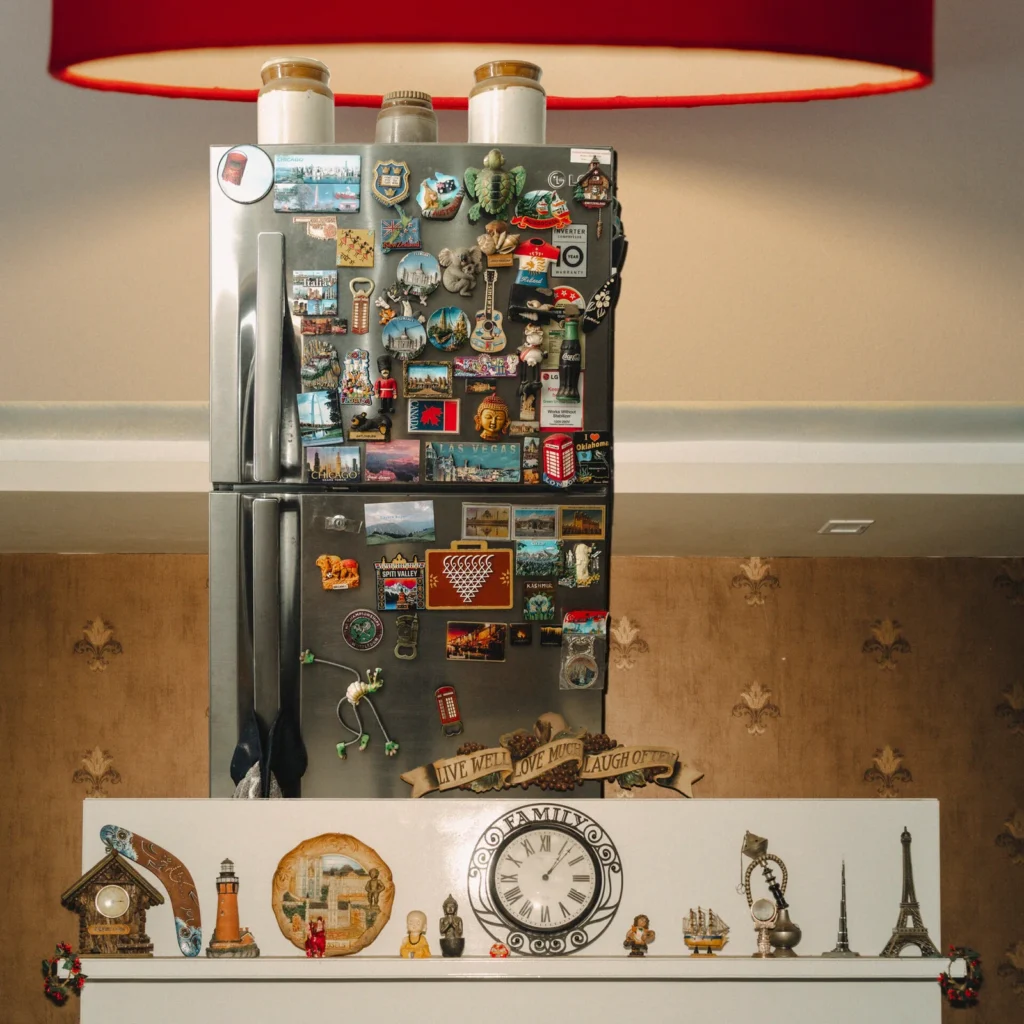
A refrigerator covered in magnets brings the inquiry back to an immediately recognisable household scene. Souvenirs accumulate across its surface; jars sit above it. A boomerang suggests “the idea of returning back to the home,” Singh explains. The jars recall older practices of preservation and exchange. Travel has entered the home and become part of its furniture.
The border follows you home
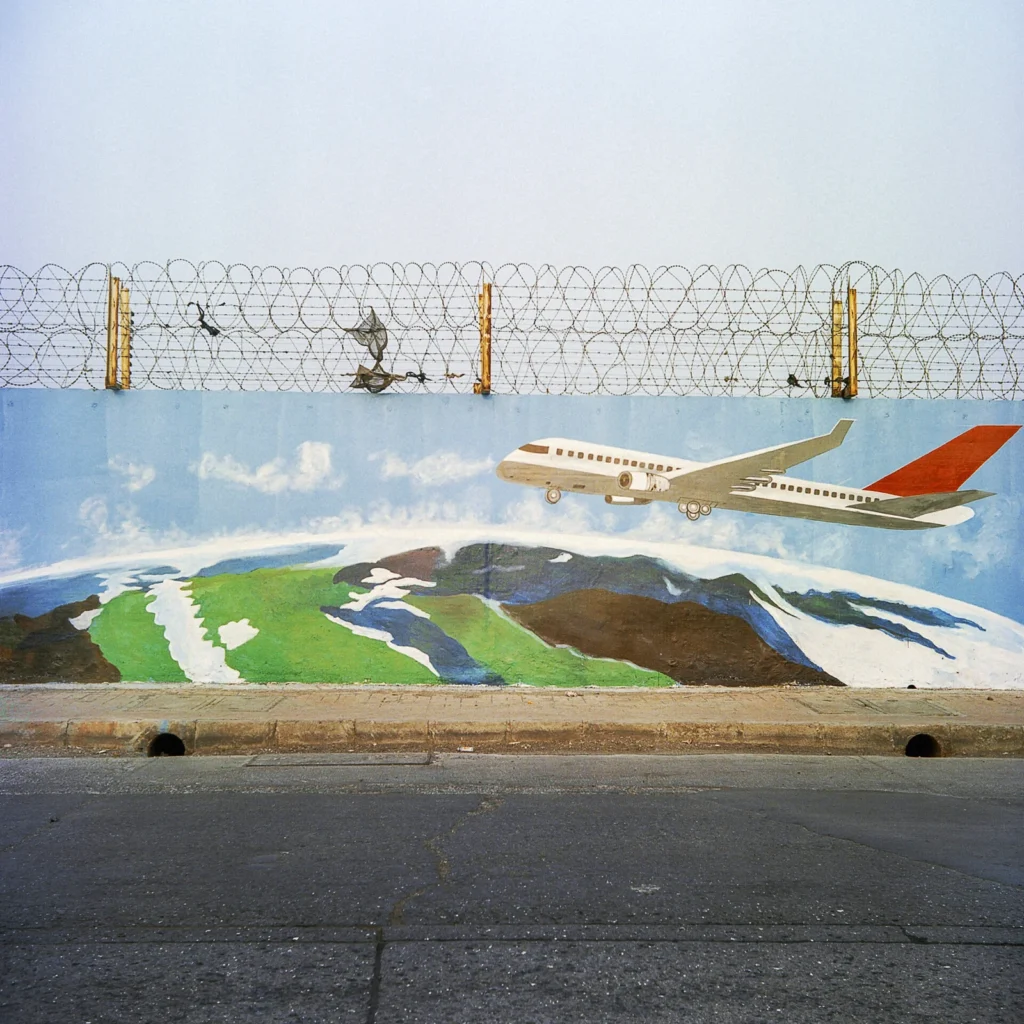
The series also turns towards the systems that permit or restrict movement. An image involving a VFS office introduces visa procedures; another places an aeroplane beneath a stretch of barbed wire. The promise of flight shares the frame with a physical barrier.
For Singh, historical structures continue to shape “who can migrate where and under what conditions.” He is interested in the unequal freedom to move between the Global North and Global South. His discussion of alternative map projections extends that concern to how the world is pictured: which places appear large, which occupy the centre, and how those choices shape our understanding of distance and importance.
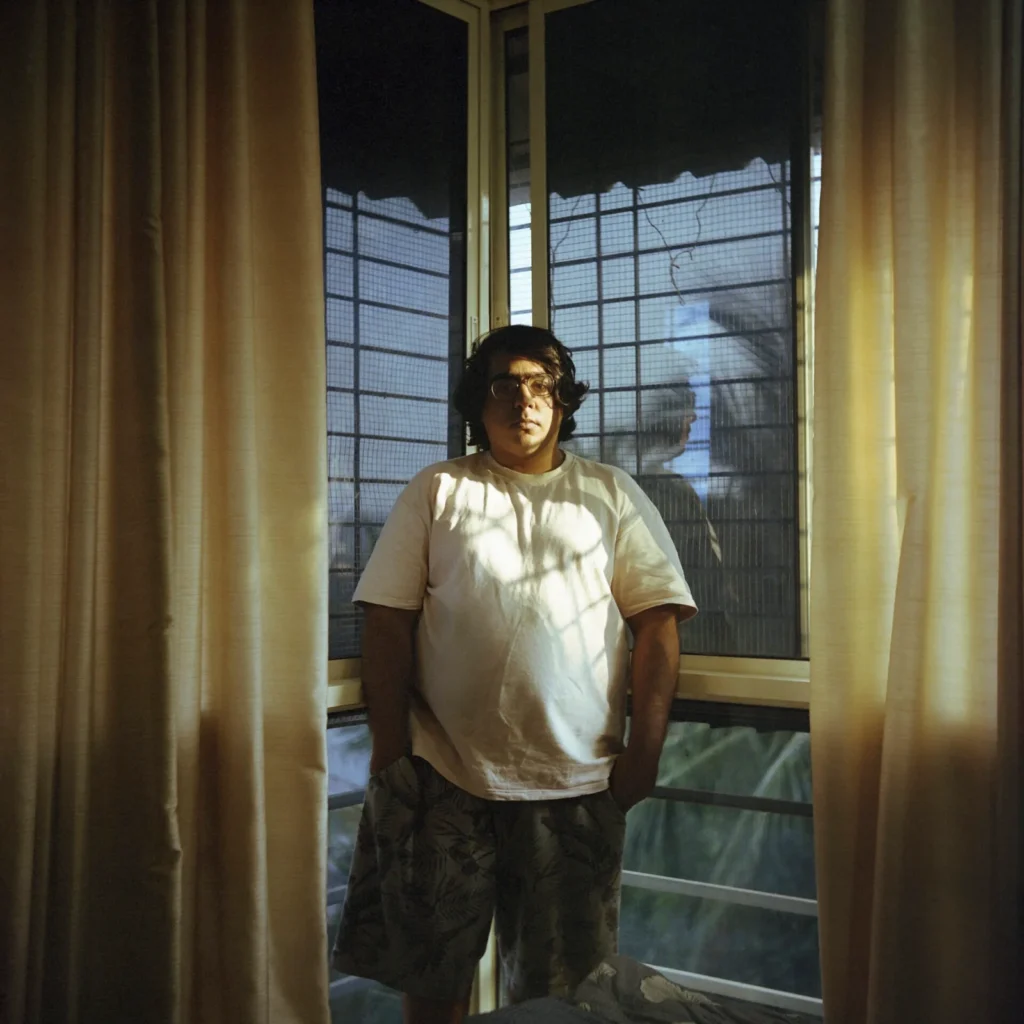
The final portrait returns these questions to a person. Photographed in Goa, Adam Barodawala faces the camera while a reflected presence appears to look outside. Singh describes “the dilemma between inside and outside” as the thought with which he wanted to end the series.
It is an apt closing image for work attentive to the uncertainty that survives a journey. Singh makes that uncertainty visible in a blocked view, a souvenir, a divided gaze. Through these intimate details, his photographs give the return home a history, and the people making it room to remain unresolved.
All images © Utkarsh Singh