Young artist Alifiyah Rajkotwala, through her work ‘Girl In Public’, explores the themes of shame, social conditioning, sexuality, and policing of women in society.
Navigating the invisible yet rigid rules dictated to women in shared environments has profoundly shaped Alifiyah Rajkotwala’s life and art. Her recent project, Girl In Public, directly confronts and challenges these unspoken societal boundaries.
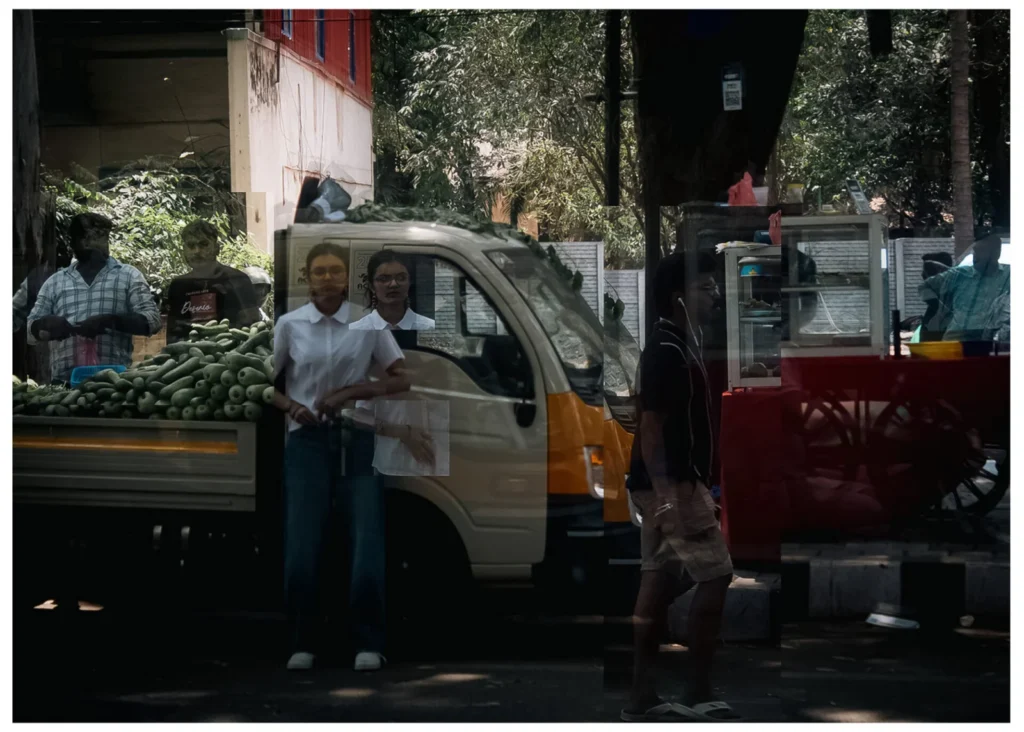
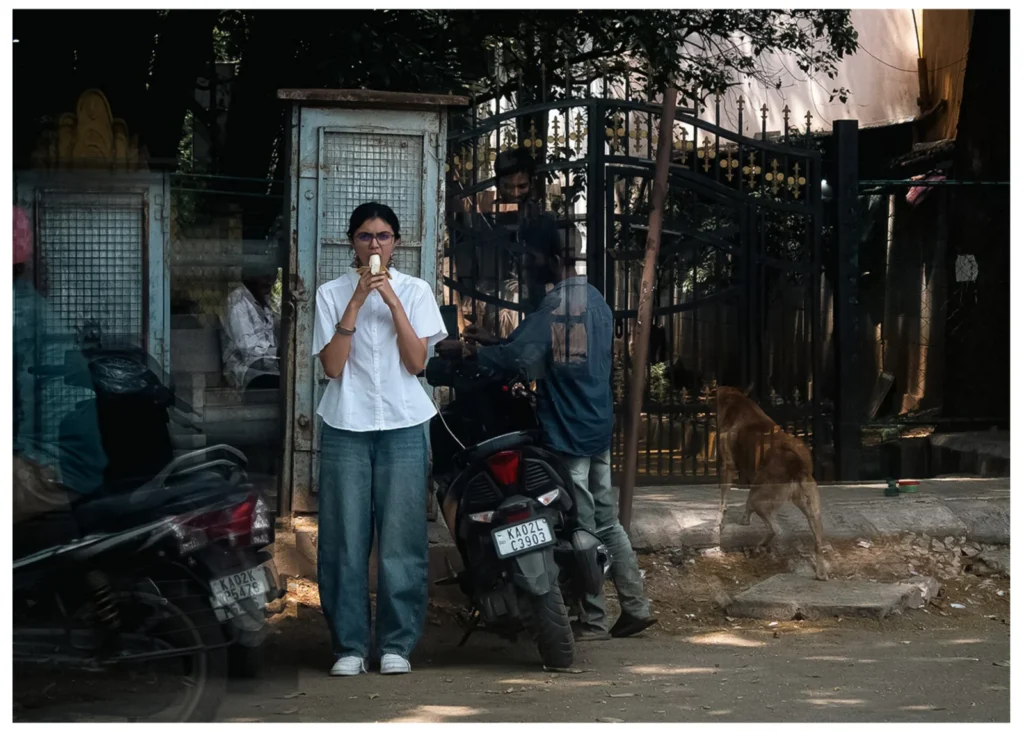
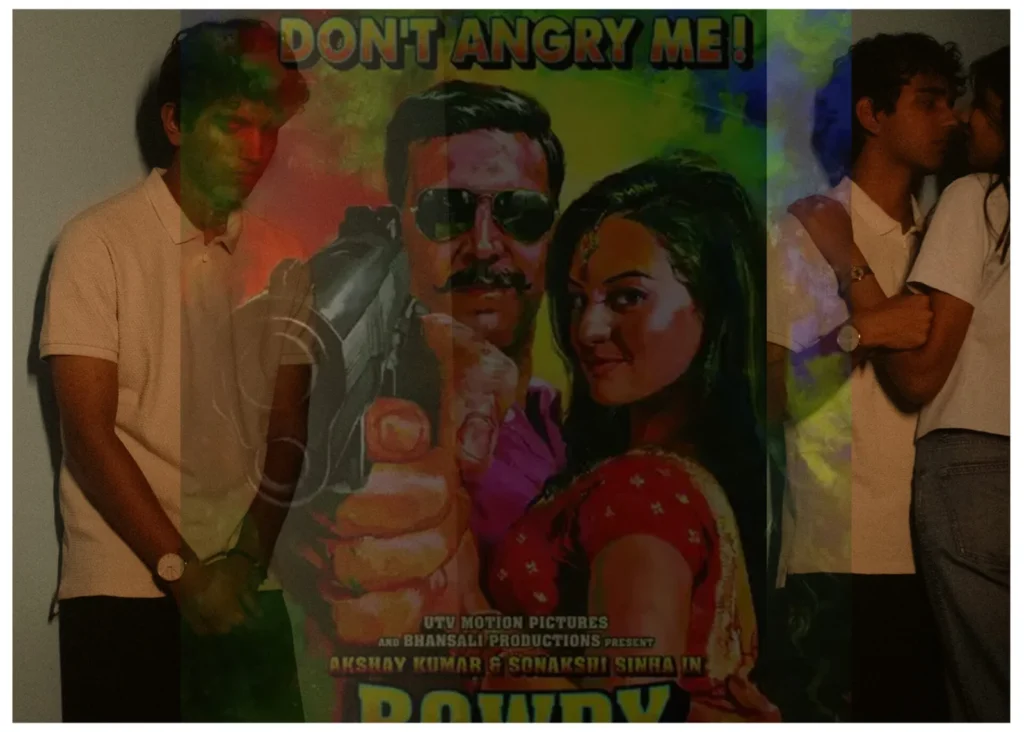
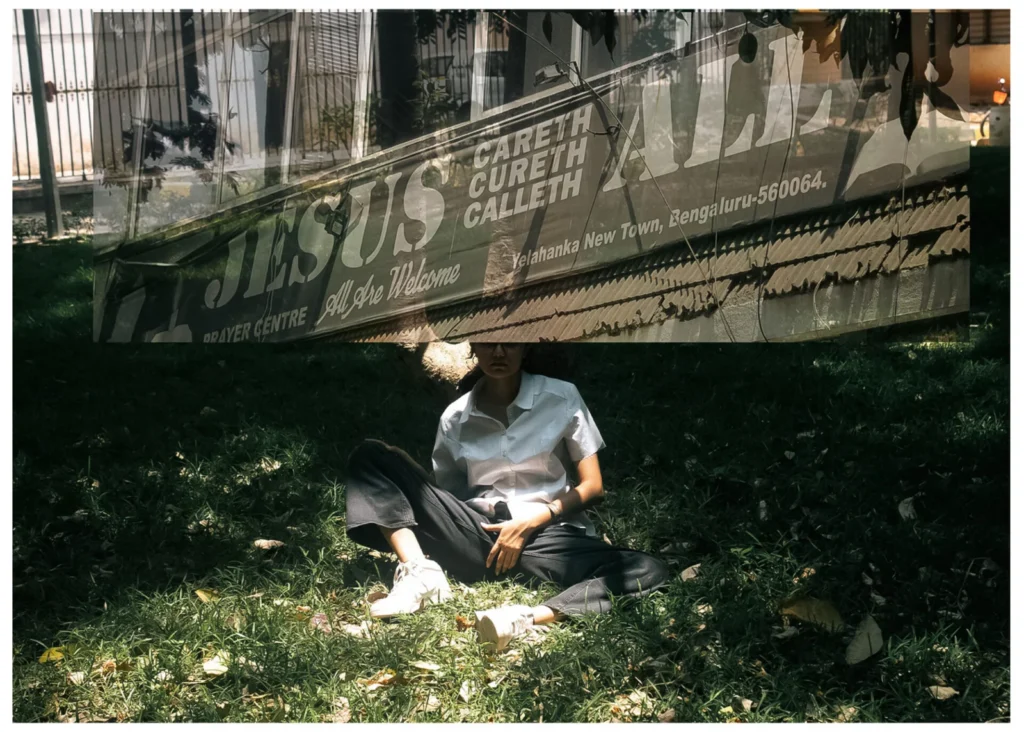
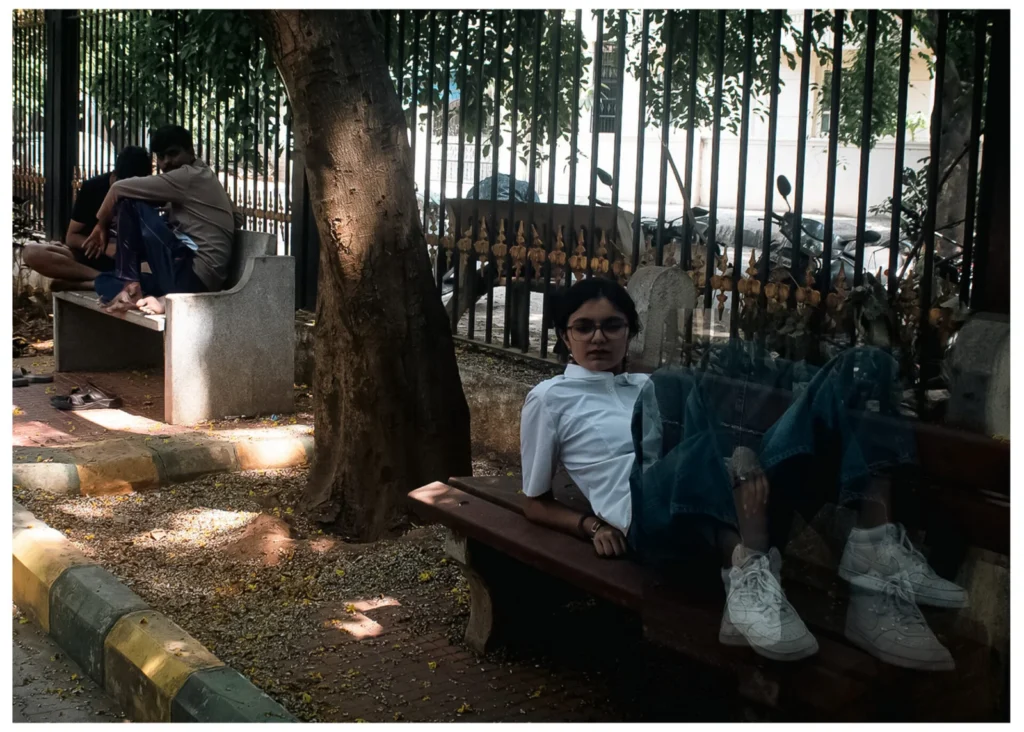
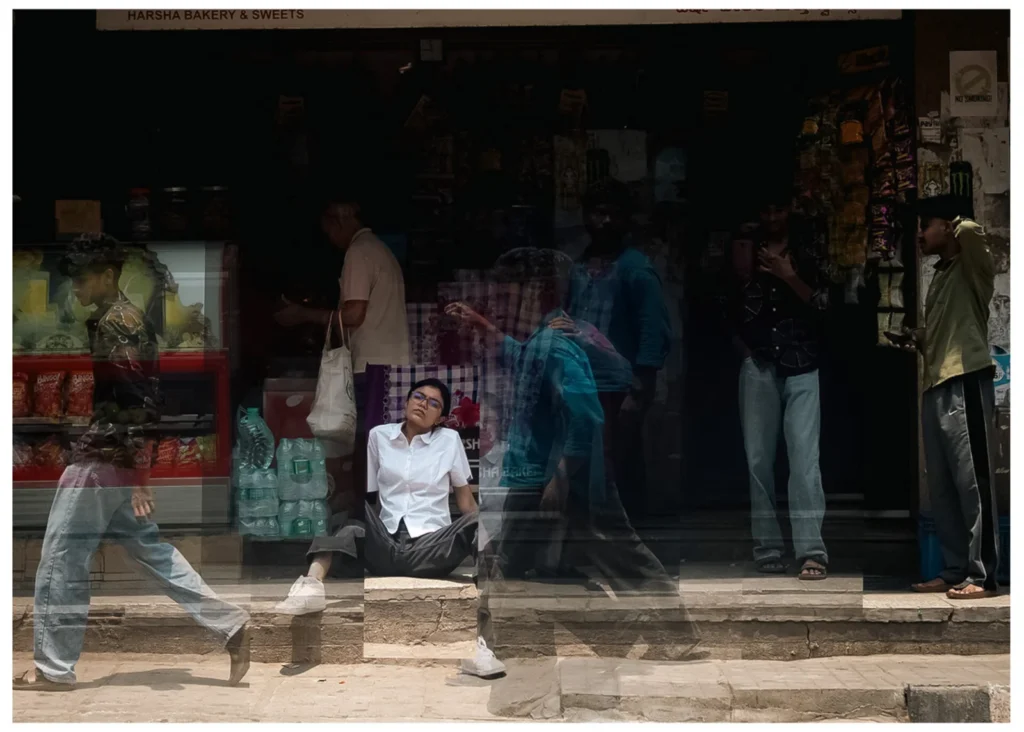
Serving as a social experiment, the 20-year-old artist places her model in public spaces touching sexual parts of her body in a non-sexual way. Through her photographs, she lets the human body be, without always sexualising it as an object of desire. By deliberately stripping these actions of any eroticism, Rajkotwala challenges conventional standards of “appropriateness” and allows the female form to simply exist.
“My intention with this series is to strip away the shame associated with sexual desire. By making these images public, we reclaim the power that shame holds over us,” she says. Explaining further, the young artiste says that the notion of shame and what can and cannot bring shame is taught as a mechanism to control people.
The inspiration for the project stems from a deeply personal incident: Rajkotwala and her partner were confronted by a security guard for a public display of affection. The intense shaming that followed triggered her own internalized societal conditioning, forcing her to worry about her “honor” and fear the inevitable “slut-shaming.”
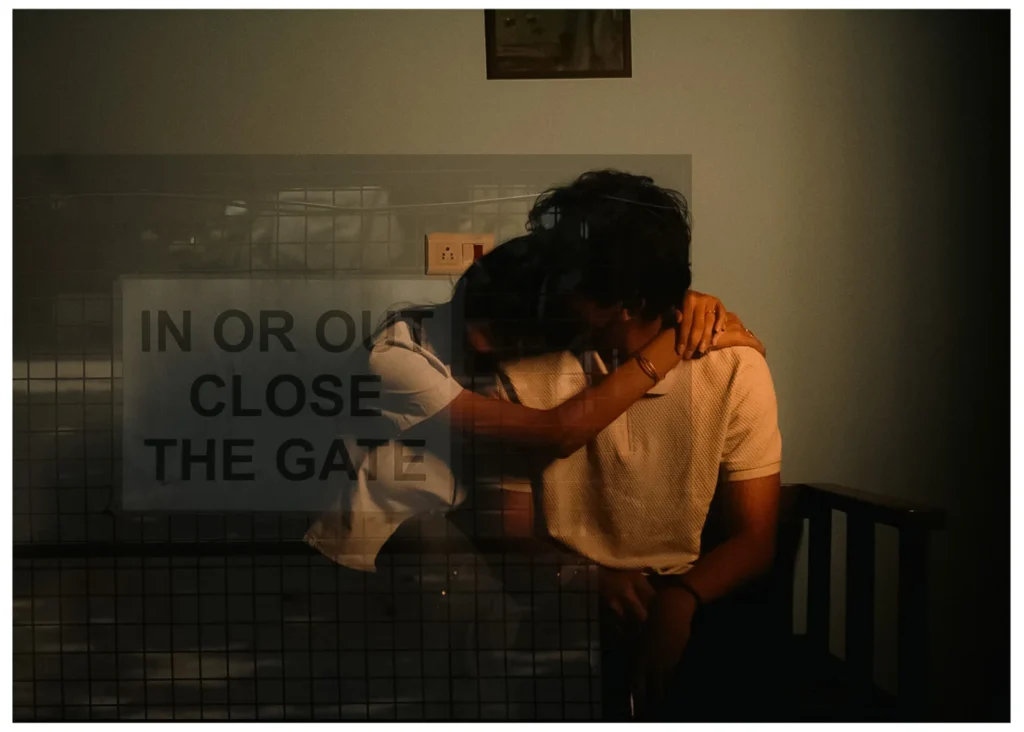
This constant scrutiny and surveillance of how women should sit, talk, dress, and be a “good girl” are inflicted on them from their birth. This often leads to women seeing themselves through that framework for the rest of their lives. Alifiyah sets out to challenge that and raise questions that haunt many of us but have been normalised by their repetitive nature.
“The work is essentially about a girl occupying space in public but in ways that are not deemed appropriate in society. So, she is touching herself in culturally private places—and that’s essentially it—seeing how this girl occupies space and how everybody else reacts to that”, Rajkotwala explains.
Through this work, Rajkotwala aims to hold a mirror up to the audience, prompting them to reflect on their own internalized conditioning and the subconscious expectations they project onto a woman’s body. She raises questions on whether seeing the model and her actions make people uncomfortable or the meaning attached to these actions are the real cause of discomfort.
The artist has insisted that this piece of work is not solely about sexuality but claiming back agency of one’s body and challenging the societal “expectations” from women in all public spaces.
“Reclaiming power or taking away shame that something holds, essentially means doing it more loudly,” Rajkotwala says. “It means no longer hiding.”
The project draws inspiration from feminist writers and their books; Gender Trouble by Judith Butler, Seeing Like a Feminist by Nivedita Menon. Through these texts, the artist started to examine and interpret ideas of gender, respectability, and socially acceptable behaviour. She questions whether and how many of these may just be a social construct.
The photographs also bring forth how women’s autonomy and freedom is also defined by class. The artist adds that though she did not want to solely focus on class, it exists in our society, our reality, and space.
She recognises these complexities and agrees that her art is work-in-progress as she tries to navigate these layers of society while navigating her way through the project.
All Image © Alifiyah Rajkotwala